
As concerns over water quality rise, many homeowners seek solutions for contaminants like per- and poly-fluoroalkyl substances (PFAS). Known as "forever chemicals," PFAS have been linked to numerous health issues, and learning about their presence in drinking water is crucial. Brita filters, popular for their affordability and accessibility, are often considered for this task. But do they effectively remove PFAS? In today’s article from Aqua Doctor, we’ll explore how Brita filters work and if they really remove PFAS from your drinking water.
Do Brita Filters Remove PFAS?
Understanding PFAS
PFAS are man-made chemicals found widely in the environment. They contaminate drinking water sources and affect millions of Americans. Health risks associated with PFAS exposure include cancer, immune system disruptions, developmental delays in children, fertility problems, and elevated cholesterol levels. Given these threats, understanding how to remove PFAS from our water is vital.

How Do Brita Filters Work?
Brita filters, including the standard and Elite models, utilize activated carbon and ion exchange technologies to improve drinking water quality. However, does this process remove dangerous PFAS from your drinking water?

Effectiveness of Brita Filters
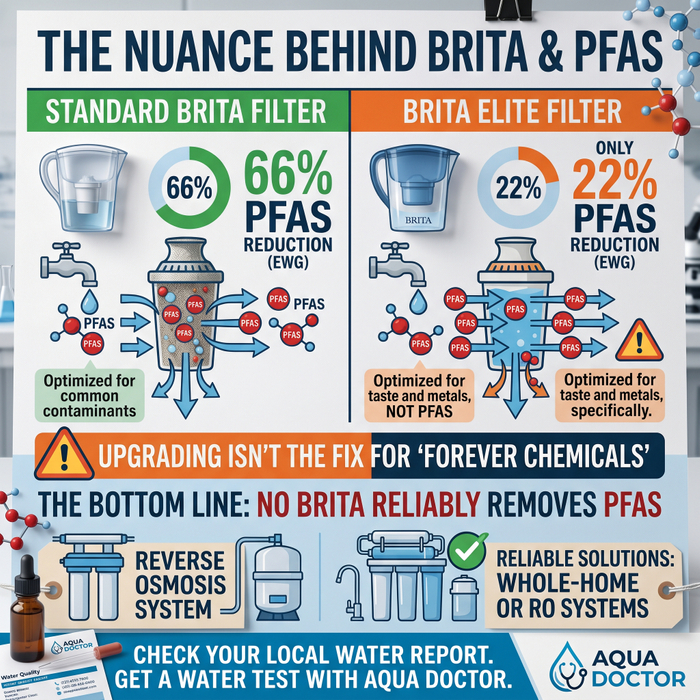
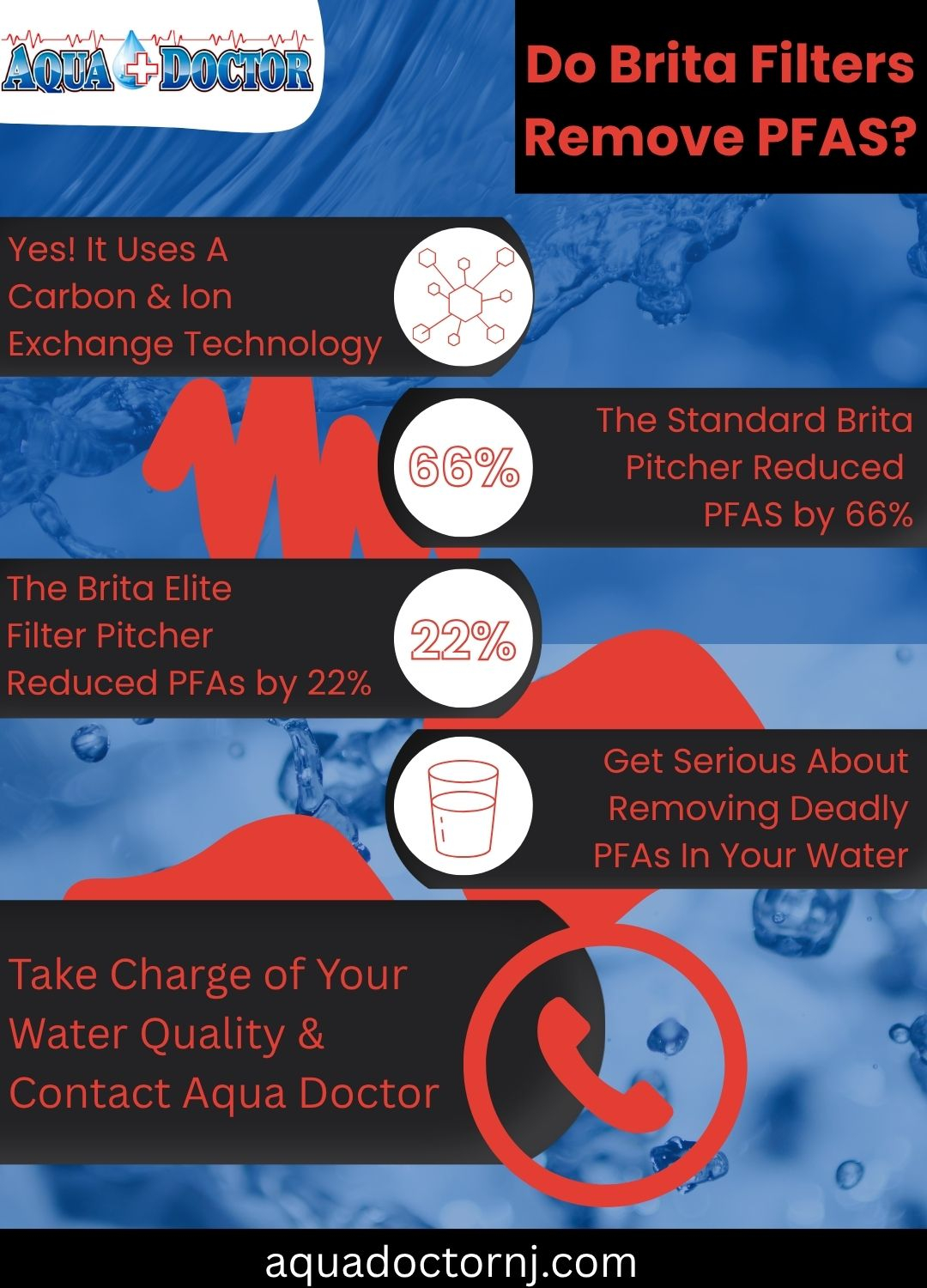
Research completed by the Environmental Working Group (EWG) that studied the effectiveness of 10 different home water filters, indicates that while Brita filters can reduce PFAS levels, they may not be as effective as other filtration options. For instance, tests revealed that the standard Brita pitcher reduced PFAS by just 66%. Meanwhile, the Brita Elite filter saw an even more significant drop in effectiveness, reportedly reducing PFAS by only 22%. Thus, while these filters help improve water quality, they may not adequately eliminate PFAS.
Does the Brita Elite Filter Remove PFAS?
Not entirely — and that's the nuance worth knowing before you buy one. EWG testing found the Brita Elite reduced PFAS by only about 22%, actually less than the standard Brita pitcher's 66% reduction. This is likely because the Elite filter is optimized for other contaminants (like chlorine taste and certain metals), not PFAS specifically. So if your main concern is "forever chemicals," upgrading to Elite isn't the fix many homeowners assume it is.
The bottom line: No Brita pitcher — standard or Elite — reliably removes PFAS to a level you can count on. If PFAS is a documented issue in your water (check your local water quality report), a whole-home or reverse osmosis system is the more reliable solution. Aqua Doctor can test your water and tell you exactly what you're dealing with.

The Science Behind Brita's Limitations
Brita filters primarily rely on activated carbon to trap contaminants. While this is effective for chlorine, lead, and some volatile organic compounds, PFAS molecules are tiny and have a strong carbon-fluorine bond, making them difficult to capture. Additionally, the limited contact time water has with the filter media as it passes through a pitcher or dispenser may not be sufficient for comprehensive PFAS removal. This is why more advanced systems, which force water through multiple layers of specialized media at a controlled rate, are more effective.
Advanced Solutions for PFAS Removal
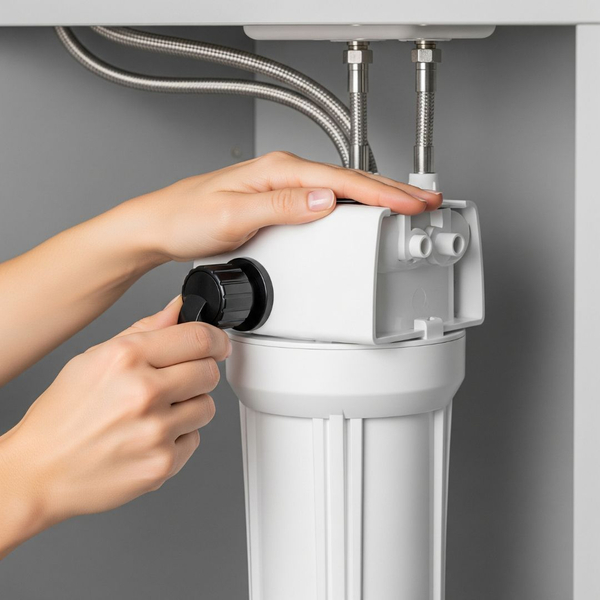
For reliable PFAS removal, you need a system engineered for the task. Reverse osmosis (RO) and Granular Activated Carbon (GAC) systems designed explicitly for PFAS are far more effective than standard pitcher filters. RO systems physically remove contaminants by forcing water through a semipermeable membrane. At the same time, advanced GAC filters use a more robust form of activated carbon that is better equipped to trap these "forever chemicals." Don't compromise on your family's health—for a comprehensive solution, contact our team today for a free consultation.

Choosing the Right Solution
If you're serious about reducing PFAS in your drinking water, consider investing in a more robust water treatment solution. Products specifically designed for PFAS removal offer much more assurance than standard pitcher filters. When exploring your options, keep these key steps in mind:
Focus on proven technologies: Look for under-sink or whole-home systems that utilize reverse osmosis, ion exchange, or granular activated carbon, which are highly effective at PFAS removal.
Check for certifications: Ensure any system you consider is independently certified to NSF/ANSI standards specifically for the reduction of PFAS compounds (such as PFOA and PFOS).
Consult a professional: Partner with a trusted local expert like Aqua Doctor. We can test your water and ensure you get a solution perfectly tailored to your home's unique water quality challenges.
Take Charge of Your Water Quality
In an age where clean drinking water is non-negotiable, make smart choices for your health and safety. At Aqua Doctor, we provide expert assessments and advanced water solutions designed to effectively remove harmful substances like PFAS. Contact our Hewitt or Ridgewood, New Jersey location today for a consultation and take the first step toward cleaner, safer water for you and your family!